

Changing the spark plugs in a car positively affects the car's performance and efficiency, as new spark plugs provide strong ignition, leading to a faster engine response and improved combustion, which in turn strengthens the engine's torque and makes the car run more powerfully.
New spark plugs contribute to more efficient fuel combustion, which reduces fuel consumption and increases efficiency. Better fuel combustion reduces harmful emissions from the car. New spark plugs help start the engine more easily and quickly, even in cold weather. Therefore, we get the benefits of changing spark plugs when we find that they give the engine a longer lifespan and the car is smoother and quieter.
Benefits of changing spark plugs in a car

Changing spark plugs in a car has numerous benefits, including improving car performance and increasing engine life. Some of these benefits include:
- Improving engine performance involves igniting the air-fuel mixture in the combustion chamber. If the spark plugs are old or ineffective, this can negatively affect engine power and efficiency.
- Increased fuel efficiency contributes to more efficient fuel combustion, which means lower fuel consumption and greater energy efficiency.
- Reducing emissions while improving the combustion process: Good spark plugs help reduce harmful emissions from the car, thus contributing to environmental protection.
- New spark plugs help start the engine more easily, especially in cold weather conditions.
- Using certified types ensures optimal engine performance and vehicle torque, such as using spark plugs for the Renault Duster, Logan, and Symbol from Qozom Car Store.
- It helps reduce vibrations and noise in the engine.
- Regular spark plug maintenance helps keep the engine in good condition, which prolongs its life and reduces the need for costly repairs.
If you notice any problems with your car's performance, such as unusual vibrations or difficulty starting, it may be necessary to check the spark plugs and replace them if needed.
What do damaged spark plugs look like?
The shape of damaged spark plugs can appear in different forms depending on the type of damage they sustained. The shape of damaged spark plugs is divided into the following cases:
- Corrosion or excessive corrosion of electrodes, where the electrode appears as erosion or loss of volume, may be a result of excessive combustion or the use of poor-quality fuel.
- Carbon deposits on the electrodes can lead to short circuits, affecting ignition performance.
- Corrosion or damage to the insulator: If the insulator is broken or damaged, this leads to a short circuit or loss of performance.
- Rust or corrosion on the metal structure may be due to exposure to moisture or lack of maintenance.
What are the causes of spark plug failure?
- Using low-quality fuel causes carbon deposits to accumulate and damages spark plugs.
- A weakness in the ignition system, such as a drop in voltage or damage to the ignition wires, can lead to faster spark plug wear.
- Oil or water leaking into the combustion chamber can cause spark plugs to fail quickly.
- Frequent ignition and continuous or rapid engine operation can lead to spark plug damage due to excessive pressure.
The dangers of not changing spark plugs
Failure to change spark plugs in a timely manner can cause several problems that affect the car's performance and efficiency, including issues such as:
- Poor engine performance; the driver may feel a decrease in engine power due to inefficient ignition of the fuel-air mixture.
- Increased fuel consumption due to faulty spark plugs leads to incomplete fuel combustion, resulting in unjustified fuel consumption.
- Startup difficulties
- Increased harmful emissions and environmental pollution due to incomplete fuel combustion
- The accumulation of deposits and unburned materials in the engine contributes to faster wear of engine parts.
- Increased maintenance costs
- Poor spark plugs can lead to an uncomfortable driving experience and poor overall vehicle performance.
To maintain your car's performance and get the benefits of changing spark plugs, it is important to check them regularly and change them according to the manufacturer's recommendations or when you notice any signs of damage.
The difference between laser and regular spark plugs
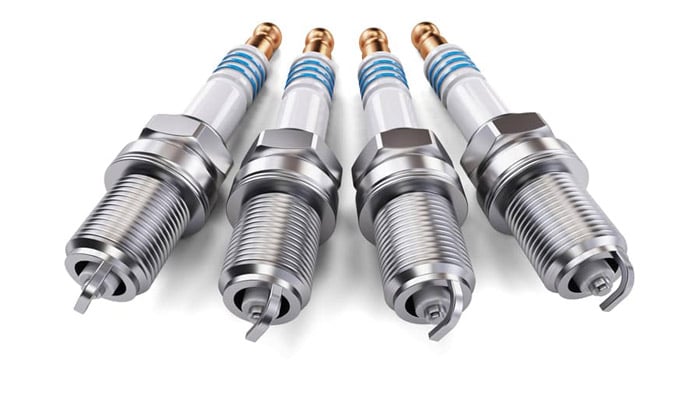
Laser and conventional spark plugs differ in design and technology, and each type has its own advantages and uses. A quick comparison between the two types reveals that:
Regular spark plugs
- Design: Standard spark plugs contain a single electrode made of basic materials such as copper or nickel, and the electrodes have a simple and straightforward design.
- Performance: Provides good ignition but not as efficient or durable as advanced spark plugs.
- Lifespan: Requires more frequent replacement compared to advanced spark plugs such as laser spark plugs.
- Cost: Lower cost compared to laser spark plugs
laser spark plugs
- Design: Laser spark plugs feature an electrode made of a special material such as platinum or iridium and have an innovative design that enhances ignition efficiency. They also contain a laser strip used to improve spark direction.
- Performance: It provides more efficient and reliable ignition thanks to the advanced design and materials used, and can contribute to improved engine performance and efficiency.
- Lifespan: Lasts longer compared to regular spark plugs thanks to advanced materials and improved design.
- Cost: More expensive than regular spark plugs due to the advanced technologies and materials used.
We discussed the benefits of changing spark plugs and the extent of the improvement the car and engine receive afterward. We also learned what happens when you change the spark plugs: the engine becomes more powerful, torque is improved, and you get the full benefit of the car's spark plugs.
Keeping spark plugs in good condition helps to maximize engine performance, which can translate into improved torque and efficiency.